Stuff! For homeschool families, it's everywhere. Books and papers. Art supplies. Math manipulatives. Science projects. Record-keeping demands its own set of materials: attendance forms, correspondence, testing, student portfolios, and piles and piles of paper! Find out strategies for storing kid's stuff, using color coding, organizing your desk, and more.
Ask around at your next homeschool conference to compare what people answer when this question pops up: "What does it mean to unschool?" Some will answer that unschooling is homeschooling without using a pre-packaged curriculum. Others will say it's simply the degree of freedom that the parents allow the child in his learning. Still others will say that unschooling defies definition because each child is unique and will go at learning in his own way, in his own time. So what's the big difference between homeschooling and unschooling? In homeschooling the parents make decisions on how to best educate the child, while in unschooling the child somehow makes those decisions for herself.
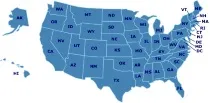
Imagine touring through all 50 states without driving, flying, taking a bus or train. The US50 consists of concise, important and meaningful information about each of the 50 states in the U.S. You'll find information on history (general history and historical figures), geography (location and state map), the outdoors, historic sites, tourist attractions, state links, state information (agriculture, industry, flag, flower, bird etc.), and state products .
The biggest problem with the issue of custody battles involving homeschooling is that both parents have to agree to the educational choice, or the judge is most likely to order a public school. In this article, the author discusses some strategies for affecting a good outcome for parents and children.
These unique sports classes are designed to bring out the best in students in a fun non-competitive environment. The structured program teaches the necessary fundamentals of sports in a stress free environment. They develop strength, fine and gross motor skills, coordination, balance and social skills, always instilling the importance of teamwork and sportsmanship.
"Not possible," homeschool mom proclaimed glumly, shaking her head. I had just explained how the Sudbury Valley School - a democratically managed, child-directed learning environment that has been around for almost 40 years - has demonstrated repeatedly that a child could learn math - all of it grades K through 12 - in eight weeks. Average (if there is such a thing), normal (never met one), healthy children, hundreds of them, learned it all, leading to admissions to some of the leading colleges and universities in the nation. "Must be some kind of trick," she insisted dolefully, remembering her own dark days in the classroom slaving over the seemingly inscrutable, all joy wrung out as from a wet sponge, then as an elementary school teacher herself, and now finally daily fighting what she was convinced was a losing homeschooling war with her nine-year-old over the required workbook pages. "Nope, no tricks, no special techniques, magic curriculum, or innovative teaching method," I informed her. The secret, if there was one, was to wait until the child asked for it, indeed insisted upon it, and had a use for it, even if the use was just college admission.